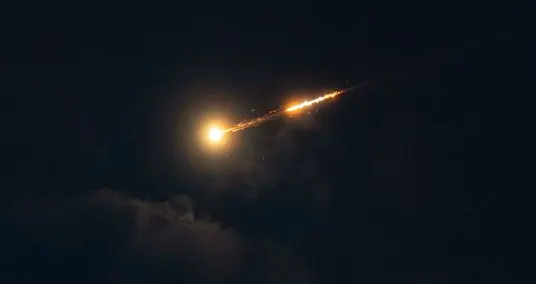
The Iran war is hitting the German economy at the worst possible time. Having only just fought its way out of a multi-year downturn, Europe's largest economy is now facing a new external shock — and the picture painted by leading researchers is one of structural exhaustion.
The country's top economic research institutes have more than halved their growth forecasts for 2026 in their Spring 2026 Joint Economic Forecast, published Wednesday.
The report, compiled twice a year on behalf of the Federal Ministry for Economic Affairs, draws on contributions from the German Institute for Economic Research (DIW Berlin), the Ifo Institute and the Kiel Institute for the World Economy, among others.
Iran war halves growth forecast
Where economists were still projecting growth of 1.3% to 1.4% last autumn, the institute now expects GDP to expand by just 0.6% this year and 0.9% in 2027.
Economic output effectively stalled in the first quarter, with the Bundesbank's March monthly report finding that real GDP likely stagnated on a seasonally adjusted basis in the first three months of the year.
"The energy price shock in the wake of the Iran war is hitting the recovery hard, but expansive fiscal policy is supporting the domestic economy and preventing a more severe downturn," said Timo Wollmershäuser, head of economic research at the ifo Institute.
Blocked shipping routes and disrupted energy markets are pushing up commodity and energy prices worldwide, with direct consequences for Germany's energy-intensive industry.
Related
-
This German village relies on renewables to avoid rising energy costs
-
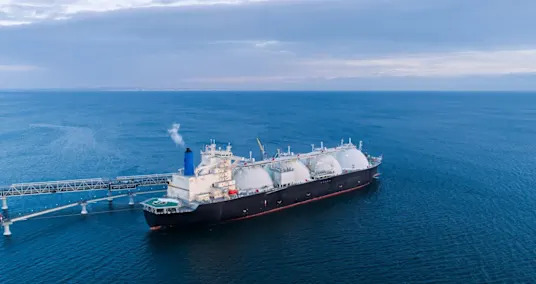
Germany's first Omani LNG shipments arrive despite Middle East disruptions
Inflation on the rise
The price increases are feeding through to consumers. The institutes expect average annual inflation to reach 2.8% in 2026 and 2.9% in 2027.
The Bundesbank warns the rate could climb sharply towards 3% in the near term, driven primarily by higher fuel and heating oil prices.
Should the Strait of Hormuz — the central artery for global oil and LNG trade — remain blocked, upside risks to inflation could be greater still, directly weighing on private consumption that was supposed to anchor the domestic recovery.
While parts of the defence industry and civil engineering are benefiting from government spending, industry as a whole remains sluggish.
Exports are barely growing, held back by weak competitiveness, geopolitical uncertainty and trade policy headwinds.
The Bundesbank notes that low capacity utilisation is compounding the problem.
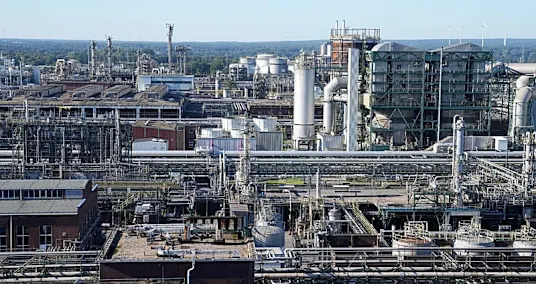
The chemical sector is bearing the sharpest pain. The Hormuz blockade is disrupting supply chains for raw materials that have no short-term substitutes.
latest_posts
- 1
 Our favorite Space.com stories of 2025
- 2Greenland’s melting ice and landslide-prone fjords make the oil and minerals Trump is eyeing dangerous to extract
- 3Instructions to Pick the Right Tires for Your Slam 1500.
- 475% of US adults may meet criteria for obesity under new definition, study finds
- 5Merz: 80% of Syrians in Germany should return in three years


- What's going around right now? COVID, flu, stomach bug on the rise
- New movies to watch this week: See 'Marty Supreme' in theaters, rent 'Springsteen: Deliver Me from Nowhere,' stream 'Cover-Up' on Netflix
- Bennu asteroid samples provide clues about solar system origins and 'space gum'
- The Force of Positive Reasoning: Day to day Attestations
- HGV driver recruited others to smuggle migrants
- Vote In favor of Your Favored Pizza Cover
- Industrial zone damaged in Negev, falls in Sharon area after Iran fires missiles towards Israel
- Arctic sea ice hits lowest winter level as heat records are shattered worldwide
- Hanwha Ocean secures orders worth $866m for five vessels